





Inspection Steps Required for DIN Globe Valves Before Entering the Warehouse of Finished Goods
For manufacturers and exporters of globe valve without bellows, final inspection is the last quality-control stage before products are released to the finished goods warehouse. Unlike bellows-sealed globe valves, conventional globe valves generally use packing and a gland arrangement around the stem to prevent external leakage. Therefore, special attention should be given to stem sealing, packing compression, valve operation, seat tightness, pressure resistance, dimensional accuracy, and overall product condition. A systematic final inspection ensures that every valve conforms to the applicable DIN/EN standard, approved drawings, purchase-order requirements, and customer specifications.
1. Verify the Inspection Documents
Before physically inspecting the valve, the quality inspector should review the relevant technical documents.
The inspection package normally includes:
- Purchase order
- Approved valve drawing
- Technical specification
- Applicable DIN/EN standards
- Material certificates
- Production records
- Previous inspection records
- Pressure-test requirements
- Customer-specific requirements
The inspector should confirm the valve type, DN size, PN rating, end connection, body material, trim material, operation method, and quantity.
Any difference between the manufactured valve and the approved documentation should be investigated before warehouse release.
2. Check Material Identification and Traceability
Material verification is essential for pressure-containing components.
The inspector should verify the materials of the:
- Valve body
- Bonnet
- Disc
- Stem
- Seat ring
- Packing
- Bolting
- Other pressure-containing or critical components
Heat numbers and material markings should be checked against the corresponding material certificates.
For stainless steel and alloy-steel globe valves, PMI may be performed when required by the customer's specification or quality plan.
Good traceability allows the finished valve to be linked back to its original raw material and manufacturing records.
3. Perform Visual Inspection
A complete visual inspection should be conducted after machining, assembly, pressure testing, and painting.
The inspector should look for:
- Cracks
- Casting defects
- Porosity
- Surface damage
- Burrs
- Machining defects
- Corrosion
- Damaged threads
- Improper assembly
- Missing bolts or nuts
- Damaged handwheel
- Oil, dirt, or foreign material
For cast steel DIN globe valves, particular attention should be paid to the body and bonnet because these are pressure-containing components.
The finished valve should have a clean, professional appearance suitable for shipment.
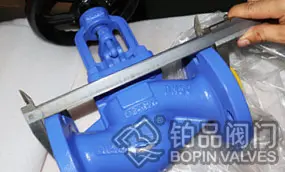
4. Check Main Dimensions
| Dimensional inspection confirms that the valve will fit correctly into the customer's piping system. Depending on the design, inspectors should verify:
For flange-end DIN globe valves, the flange dimensions should correspond to the specified DIN/EN flange standard. Face-to-face dimensions are particularly important because incorrect dimensions can cause installation problems even when the valve has passed pressure testing. | 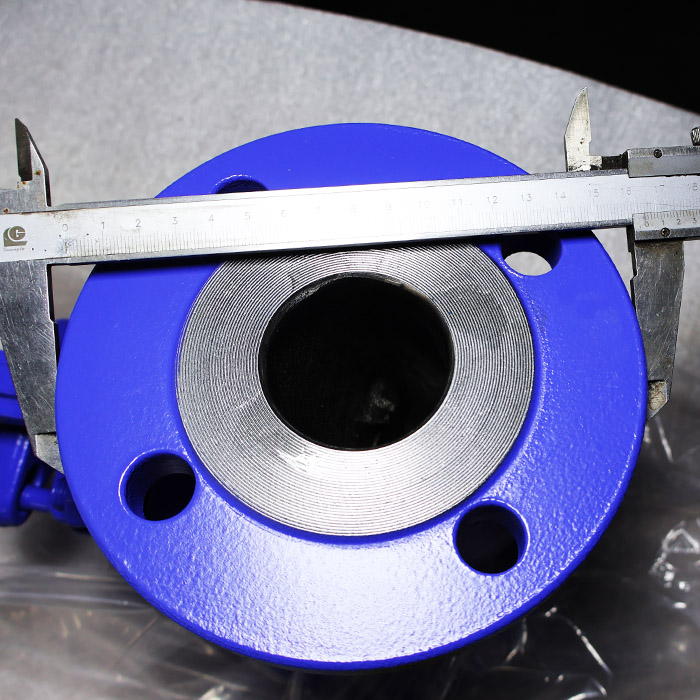 |
5. Inspect Flange Sealing Surfaces
The flange sealing face should be carefully inspected before the valve enters storage.
Inspectors should check for:
- Scratches
- Dents
- Corrosion
- Uneven machining
- Mechanical damage
- Incorrect surface condition
- Paint contamination
The sealing face should conform to the specified flange design and customer requirements.
After inspection, flange protectors should be installed to prevent damage during handling and storage.
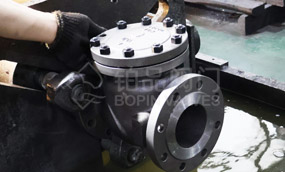
6. Conduct Body or Shell Pressure Testing
The valve body should undergo the required shell pressure test according to the applicable standard and approved inspection procedure.
The test verifies the pressure integrity of:
- Valve body
- Bonnet
- Body-bonnet joint
- Pressure-containing connections
During testing, inspectors should monitor for visible leakage, abnormal pressure loss, deformation, or other defects.
The test pressure and holding time should be established according to the applicable standard and purchase specification rather than applying one fixed value to all DIN globe valves.
The test result should be recorded and traceable to the individual valve or inspection batch.
7. Perform Seat Leakage Testing
Seat leakage testing is a critical inspection for a globe valve because the disc and seat must provide the required shut-off performance.
The valve should be tested in accordance with the specified standard and acceptance criteria.
The inspector should verify:
- Disc-to-seat sealing
- Leakage rate
- Test direction
- Test pressure
- Test duration
- Acceptance result
Metal-seated globe valves may have different permissible leakage requirements from resilient-seated valves, so inspectors should always use the applicable test criteria.
If leakage exceeds the permitted limit, the valve should be repaired or adjusted and then tested again.
8. Inspect Stem Packing and Gland Sealing
This is one of the most important differences between a conventional globe valve and a bellows-sealed globe valve.
A DIN globe valve without bellows normally relies on stem packing to prevent process-medium leakage around the moving stem.
The inspector should check:
- Packing type
- Packing installation
- Packing compression
- Gland alignment
- Gland-bolt tightening
- Stem surface condition
- Leakage around the stem
The gland should be tightened sufficiently to achieve sealing without creating excessive friction.
Over-compression can make the handwheel difficult to operate, while insufficient compression can cause external leakage.
9. Check Valve Operation
Each finished valve should be operated according to the approved inspection procedure.
The inspector should slowly open and close the valve and confirm:
- Smooth stem movement
- Correct disc travel
- Correct opening direction
- Correct closing direction
- No abnormal noise
- No sticking
- No excessive operating torque
- Proper handwheel installation
The stem should move smoothly through the complete operating range.
If the valve requires excessive force, the inspector should investigate possible causes such as packing over-compression, stem damage, incorrect disc alignment, or internal contamination.
10. Inspect Disc and Seat Assembly
The disc and seat are the main internal working components of the globe valve.
Inspection should confirm that:
- The disc is correctly installed.
- The seat ring is correctly positioned.
- The disc moves freely.
- The seating surfaces are undamaged.
- No foreign objects remain inside the valve.
- Internal components are properly secured.
For globe valves with replaceable seat rings, the seat ring should be correctly installed and securely fitted.
The internal flow passage should also be clean before final packaging.
11. Check Bonnet, Bolting, and Joints
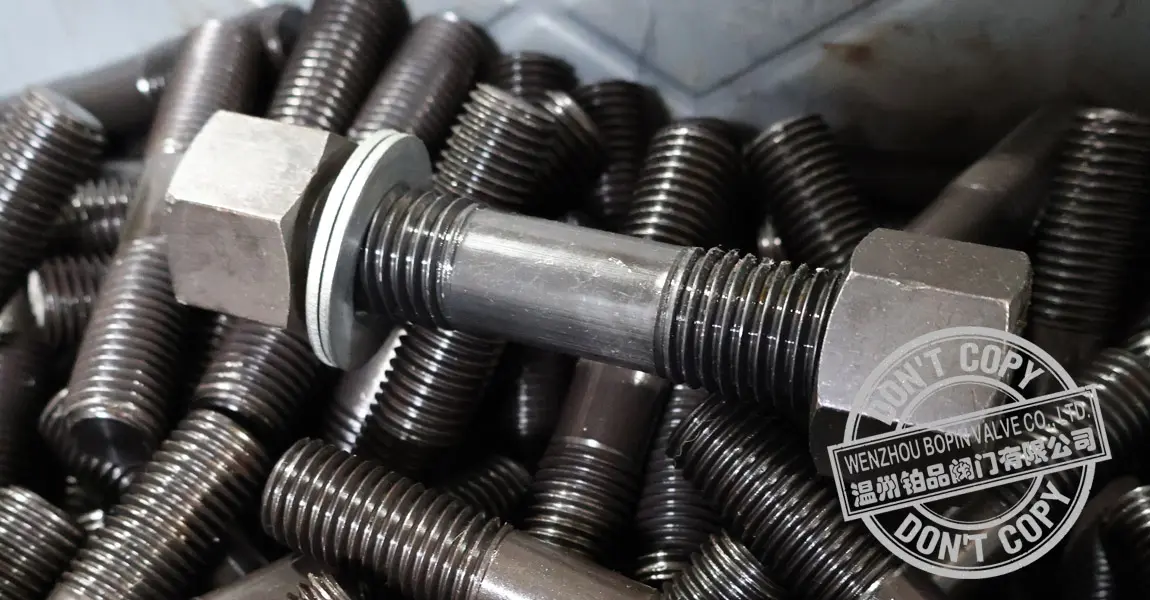
The body-bonnet connection should be inspected carefully.
Inspectors should check:
- Bonnet alignment
- Bolt and nut installation
- Bolt tightening
- Gasket installation
- Joint condition
- Absence of visible leakage
- Thread condition
The bonnet should sit correctly on the body without abnormal gaps or misalignment.
If a bolted bonnet is used, the fasteners should be tightened according to the approved assembly procedure.
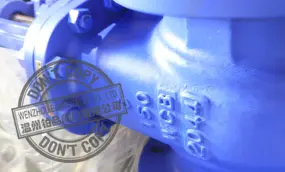
12. Verify Marking and Nameplate
Correct product identification is essential for traceability and customer acceptance.
Depending on the applicable requirements, markings may include:
- Manufacturer name or trademark
- Valve type
- DN
- PN
- Body material
- Flow-direction marking, where required
- Heat number
- Standard designation
- Other customer-specified information
The nameplate should match the purchase order, technical documents, and actual valve specifications.
Markings should be clear, durable, correctly positioned, and easy to read.
13. Inspect Painting and Surface Treatment
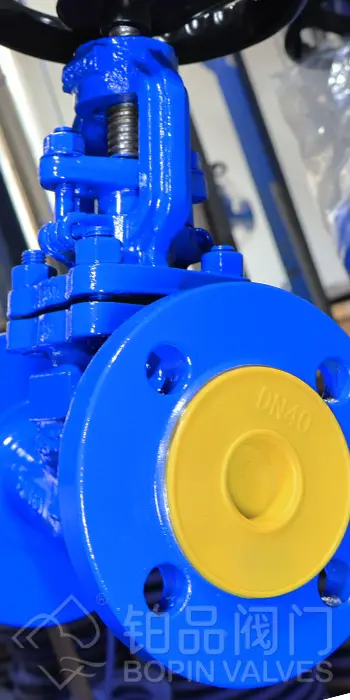 | After pressure testing, the valve should receive the specified surface protection. The inspector should examine:
Flange sealing faces, stems, threads, and other machined surfaces should be protected from inappropriate paint contamination. Any damaged coating should be repaired before packaging. |
14. Check Internal Cleanliness
Before final release, the valve should be internally and externally clean.
Inspectors should ensure that there are no:
- Metal chips
- Sand
- Welding residues
- Dust
- Excessive grease
- Packaging material
- Foreign objects
Special-service valves may require additional cleanliness procedures according to customer specifications.
After cleaning, suitable protective caps or covers should be fitted to the valve ends.
15. Review Final Test Records
The quality department should review all inspection records before authorizing warehouse entry.
The final documentation may include:
- Material certificates
- Dimensional inspection report
- Shell pressure-test report
- Seat leakage-test report
- PMI report, if applicable
- Functional test record
- Painting inspection record
- Certificate of conformity
- Final inspection checklist
All records should correspond to the valve's identification and traceability information.
16. Inspect Packaging
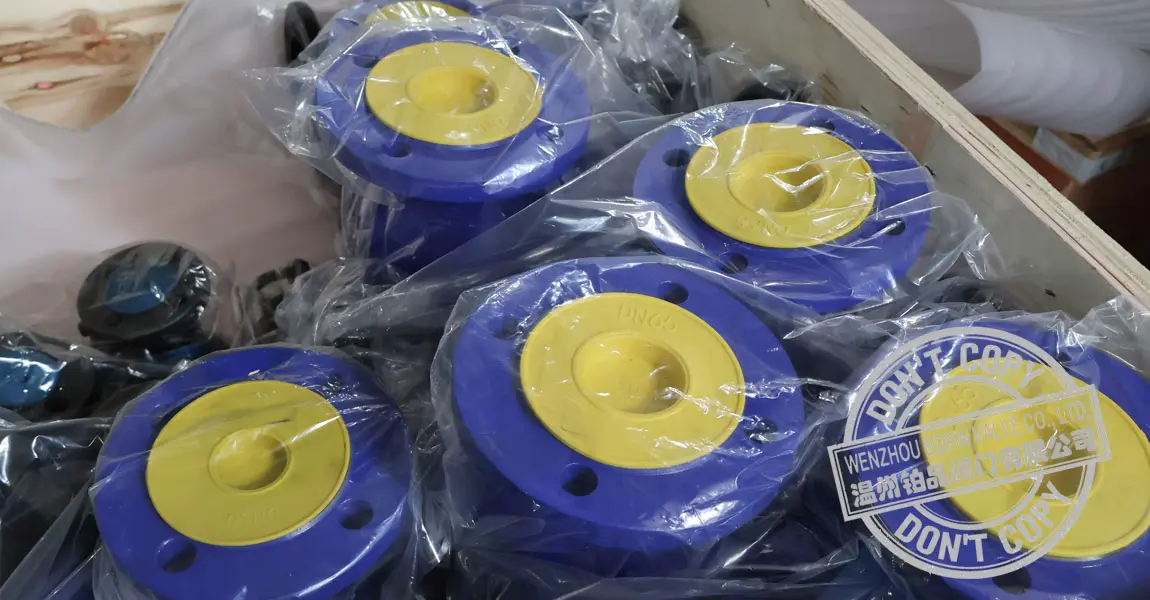
Packaging is the final physical protection step before warehouse storage.
The inspector should confirm that:
- Flange faces are protected.
- Valve ends are capped.
- Handwheels are protected.
- Loose components are secured.
- Valves are properly positioned.
- Packaging prevents movement.
- Product labels are correct.
- Export packaging complies with customer requirements.
For long-term storage or overseas transportation, appropriate moisture and corrosion protection should also be considered.
17. Final Quality Release
Only valves that have passed all required inspections should receive a finished goods release status.
The basic process can be summarized as:
Document verification → Material verification → Visual inspection → Dimensional inspection → Shell test → Seat test → Packing/gland inspection → Operation test → Internal inspection → Marking inspection → Painting inspection → Cleanliness check → Documentation review → Packaging inspection → Warehouse release.
Rejected or pending-inspection valves should be clearly identified and physically separated from accepted products.
Looking Forward to Future Business
As a DIN GLOBE VALVE MANUFACTUREER, BOPIN sincerely value every opportunity to work with our customers and partners around the world. We believe that successful cooperation is built on reliable quality, competitive solutions, professional service, and long-term trust. As the industrial valve market continues to develop, BOPIN will remain committed to improving our products, expanding our capabilities, and providing dependable valve solutions for demanding applications. We look forward to creating more opportunities for cooperation with both existing and new customers. With mutual trust and shared goals, we believe our future business relationship can become stronger, closer, and more successful.