







A Discussion on API 600 Check Valves
Does API 600 Apply to Check Valves?
The answer is No! API 600 does not apply to check valves as the governing product standard. API 600 is specifically titled “Steel Gate Valves—Flanged and Butt-Welding Ends, Bolted Bonnets” and establishes requirements for heavy-duty bolted-bonnet steel gate valves. The American Petroleum Institute separately identifies API 594 as the standard for check valves and API 602 as covering compact gate, globe, and check valves up to DN 100 (NPS 4).
This distinction is important for valve manufacturers, purchasers, engineers and EPC contractors because incorrectly specifying a check valve as an “API 600 check valve” can create confusion about the applicable design, testing, dimensions and certification requirements.
1. What Does API 600 Cover?
API 600 is a product standard specifically developed for steel gate valves. The API's current standards information describes API 600 as:
Steel Gate Valves—Flanged and Butt-Welding Ends, Bolted Bonnets
The standard covers a heavy-duty series of bolted-bonnet steel gate valves intended particularly for petroleum refinery and related applications where conditions such as corrosion and erosion require features including full-port openings, heavy wall sections and large stem diameters.
Therefore, API 600 is concerned with a valve whose primary function is isolation by means of a gate or wedge.
A typical API 600 gate valve may include:
- Cast or forged steel body
- Bolted bonnet
- Rising stem
- Outside screw and yoke
- Wedge gate
- Metal-seated design
- Flanged or butt-welding ends
- Full or reduced bore
- Replaceable or integral seat arrangements, depending on design
- Handwheel, gearbox or actuator operation
The design philosophy is fundamentally different from that of a check valve.
2. Why Doesn't API 600 Apply to Check Valves?
A check valve performs a completely different function from a gate valve.
A gate valve is normally operated intentionally by an operator or actuator. It is primarily used to start or stop flow.
A check valve, by contrast, operates automatically according to the direction and pressure of the fluid. It allows flow in the intended direction and closes when reverse flow occurs.
Common check-valve designs include:
- SWING CHECK VALVE
- Dual-plate check valve
- Wafer check valve
- Lug check valve
- Axial/nozzle check valve
- Butt-welding check valve
Because the operating mechanism, closure characteristics, body geometry and performance requirements differ, check valves require their own product standards.
The API standards catalog clearly separates the two categories: API 600 is listed for Cast Steel API 600 Gate Valve, while API 594 is listed for API 594 Cast Steel A216 WCB Retainerless Design Flange End Dual Plate Check Valve.
3. Which API Standard Applies to Check Valves?
| For many industrial check-valve designs, the most directly relevant standard is API 594 — Check Valves: Flanged, Lug, Wafer and Butt-Welding. API's published catalog states that API 594 covers the design, materials, face-to-face dimensions, pressure-temperature ratings, inspection, examination and testing requirements for two types of check valves. The current API standards information lists API 594 as a check-valve standard, with the 9th Edition dated February 2022 in the API catalog. API's standards committee information also shows work toward a 10th edition. For example, if a customer requires a API 594 Wafer Type Dual Plate Check Valve, API 594 is a much more appropriate product-standard reference than API 600. | 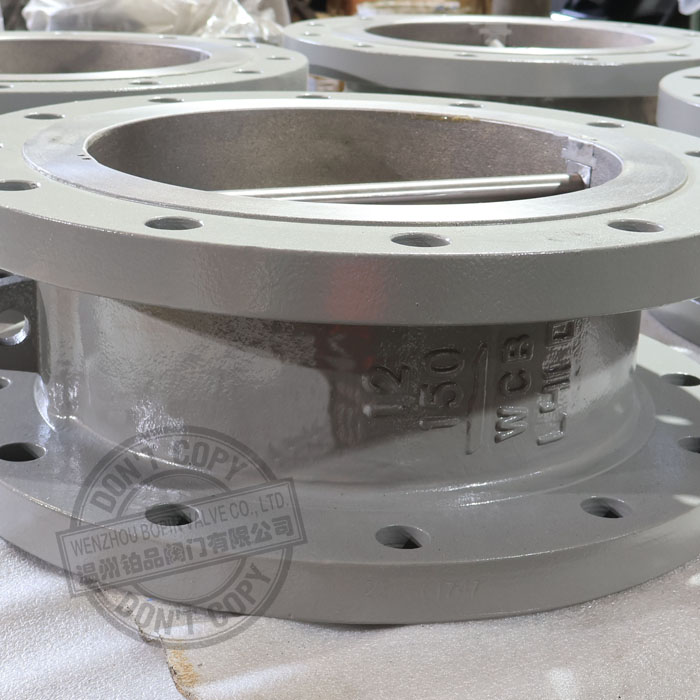 |
4. What About API 602?
There is another important API standard that specifically includes check valves: API 602.
API identifies API 602 as:
“Gate, Globe, and Check Valves for Sizes DN 100 (NPS 4) and Smaller for the Petroleum and Natural Gas Industries.”
This means API 602 can apply to compact check valves within its applicable size range and other specified requirements.
According to the API catalog, API 602 covers nominal sizes from DN 8 through DN 100, corresponding to NPS 1/4 through NPS 4, and includes pressure classes 150, 300, 600, 800 and 1500.
Consequently, the correct standard depends on the check-valve design, size, pressure class, application and project specification.
5. API 600 vs. API 594
The following comparison makes the distinction clearer:
| Item | API 600 | API 594 |
|---|---|---|
| Valve type | Gate valve | Check valve |
| Main function | Flow isolation | Prevent reverse flow |
| Standard title | Steel Gate Valves | Check Valves |
| Typical designs | Wedge gate | Swing, wafer/lug/dual-plate types within scope |
| Operation | Manual or actuated | Automatic |
| Bonnet | Bolted bonnet | Depends on check-valve design |
| End connections | Flanged/butt-welding | Flanged/lug/wafer/butt-welding within scope |
| Main application | Refinery/process isolation | Industrial and process backflow prevention |
| Product standard for check valve? | No | Yes |
API itself identifies API 594 as a check-valve standard and API 600 as a steel gate-valve standard.
6. Can a Check Valve Have Features Similar to an API 600 Valve?
This is where some confusion occurs.
A check valve may use similar materials, pressure classes, flange dimensions or manufacturing practices to an API 600 gate valve. For example, both products could potentially use:
- ASTM A216 WCB carbon steel
- ASTM A351 CF8 stainless steel
- ASTM A351 CF8M stainless steel
- Class 300
- Class 600
- ASME B16.5 flanged ends
- API 598 testing requirements
However, using the same material or pressure class does not make the check valve an API 600 valve.
For example:
ASTM A216 WCB Class 600 swing check valve
does not automatically become an “API 600 check valve.”
The manufacturer must identify the applicable check-valve product standard separately.
7. What Standard Is Used for Testing?
Testing should also be distinguished from the product-design standard.
API 598 — Valve Inspection and Testingcovers inspection, examination and pressure-test requirements for several valve types, including gate, globe, plug, ball, check and Butterfly Valves.
Therefore, a check valve could have a specification such as:
Design: API 594
Pressure Class: ASME B16.34 / applicable rating requirements
Testing: API 598
Flanges: ASME B16.5
Material: ASTM A216 WCB
The exact combination depends on the valve design and purchaser's specification.
This illustrates an important principle:
A valve specification normally consists of several standards, rather than one standard covering every aspect of the product.
8. What Is the Correct Way to Write a Check-Valve RFQ?
Instead of writing:
“API 600 Check Valve, DN200, Class 300”
a purchaser should specify the actual check-valve standard and design.
For example:
“API 594 wafer type dual-plate check valve, DN200, Class 300, ASTM A216 WCB body, stainless-steel trim, metal seated, according to applicable API 594 requirements, tested according to API 598.”
For a pipeline application, another specification could require an API 6D check valve, provided the valve design and service fall within API 6D's scope.
For a small forged check valve, API 602 may be appropriate when the size and other requirements fall within that standard's scope.
9. What About an API 600 Gate Valve and Check Valve Installed Together?
Gate valves and check valves are frequently installed in the same piping system.
For example, a pump discharge line may contain:
Pump → Check Valve → Gate Valve → Pipeline
The check valve protects the pump against reverse flow, while the gate valve provides isolation for maintenance.
The two valves can therefore operate together while being manufactured according to different standards.
For example:
- Gate valve: API 600
- Check valve: API 594
- Pressure testing: API 598 where applicable
- Flange: ASME B16.5
- Face-to-face: Applicable dimensional standard
- Materials: ASTM specifications
There is no requirement that every valve in a pipeline use API 600 simply because an API 600 gate valve is installed nearby.
10. Common Misunderstanding: “API 600 Check Valve”
The term “API 600 check valve” is sometimes used commercially because manufacturers or customers may associate API 600 with heavy-duty petroleum valves.
However, from a technical specification standpoint, this terminology should be avoided.
API's own standards listings distinguish:
- API 594 — Check Valves
- API 600 — Steel Gate Valves
- API 602 — Gate, Globe, and Check Valves for small sizes
Therefore, if a customer asks BOPIN Valve for an “API 600 check valve,” the manufacturer should clarify whether the customer actually requires:
- API 594 check valve
- API 602 check valve
- API 6D check valve
- A check valve manufactured with materials/dimensions similar to an API 600 valve
- Or an API 600 gate valve paired with a check valve
This clarification can prevent incorrect quotations and technical disputes.
11. How Should BOPIN Valve Describe Its Products?
For professional product catalogs and websites, BOPIN Valve should avoid titles such as:
“API 600 Check Valve Manufacturer”
unless there is a very specific and documented reason for referencing API 600.
Better product descriptions would be:
- API 594 Wafer Type Dual Plate Check Valve
- API 594 Flanged Swing Check Valve
- API 6D Pipeline Check Valve
- API 602 Forged Steel Check Valve
- API 600 Cast Steel Wedge Gate Valve
This makes the product's applicable standard immediately clear to engineers and purchasing departments.
API 600 does not apply to check valves as a product standard. It is specifically a standard for steel gate valves with flanged or butt-welding ends and bolted bonnets. The American Petroleum Institute separately identifies API 594 as a check-valve standard and API 602 as covering gate, globe and check valves for small sizes.
For check valves, the correct standard should be selected according to the valve type, size, pressure class, application and project requirements. API 594 is particularly relevant to flanged, lug, wafer and butt-welding check valves, while API 602 covers applicable compact check valves up to DN 100 (NPS 4).
The most important takeaway for purchasers is simple:
API 600 = steel gate valves
API 594 = check valves
API 602 = compact gate, globe and check valves within its scope
API 598 = valve inspection and testing
BOPIN Valve should clarify the requirement before quotation. The check valve may actually need to comply with API 594, API 6D, or API 602, depending on its design, size, pressure class, and application. This clarification helps avoid technical misunderstandings and ensures the correct standard is specified.