





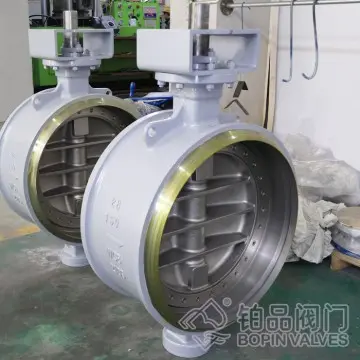
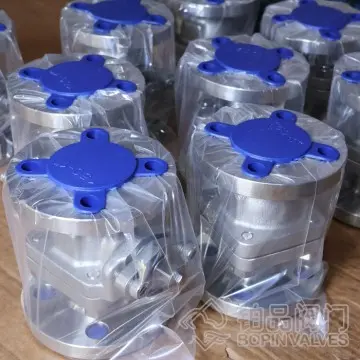
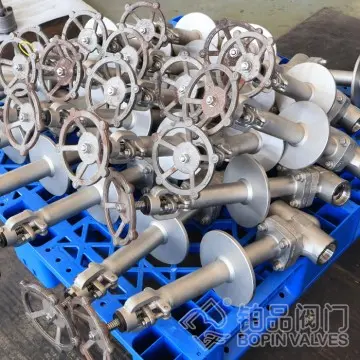
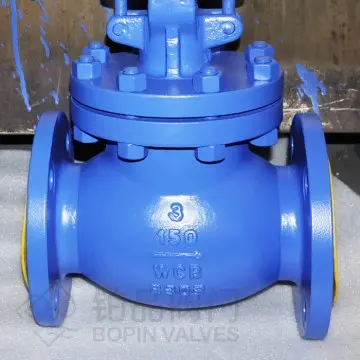
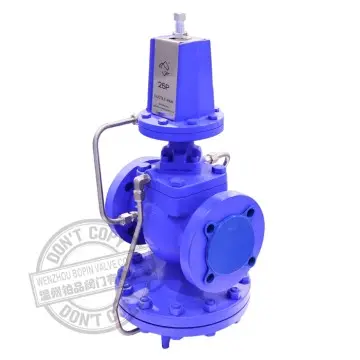


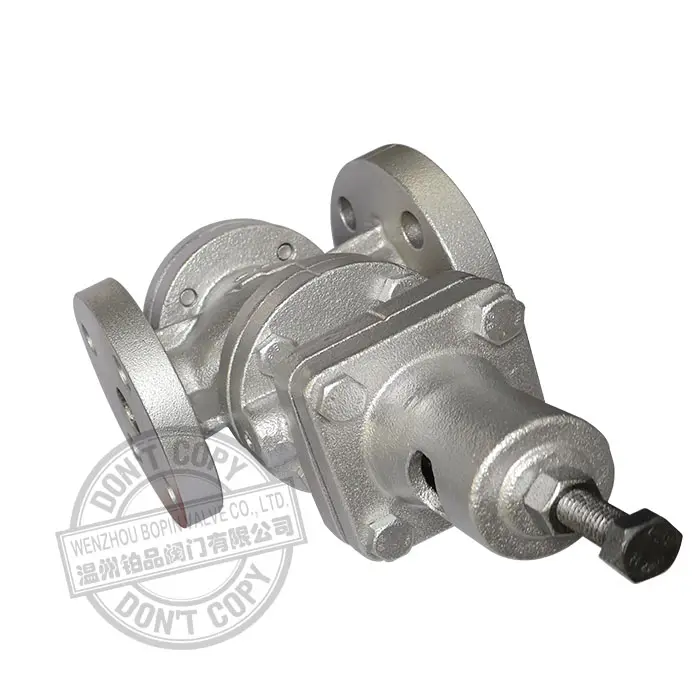
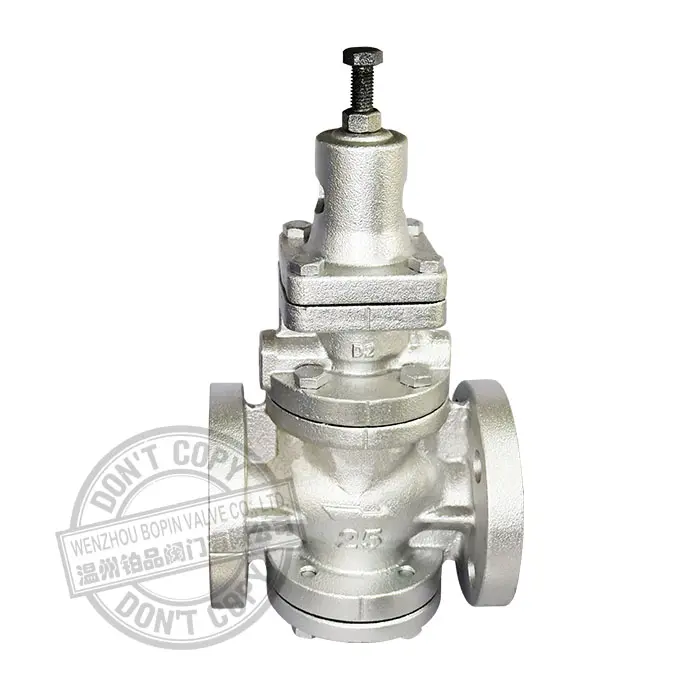
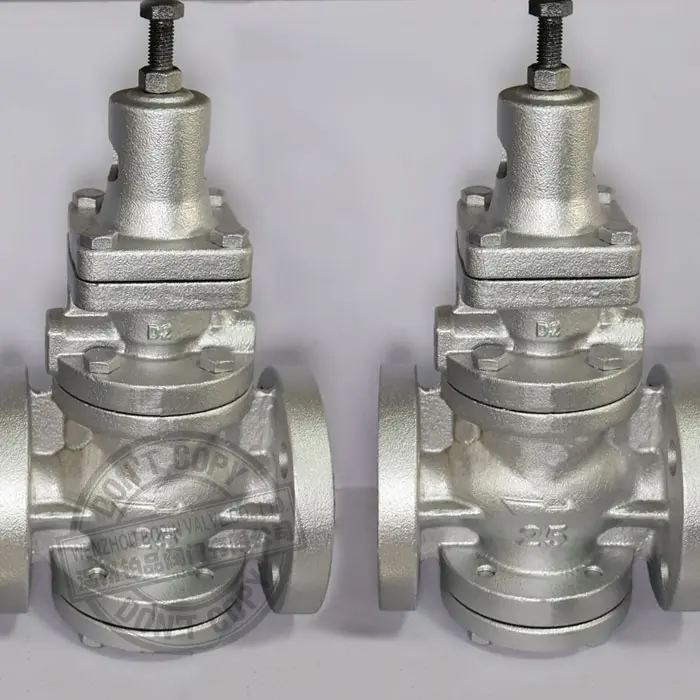
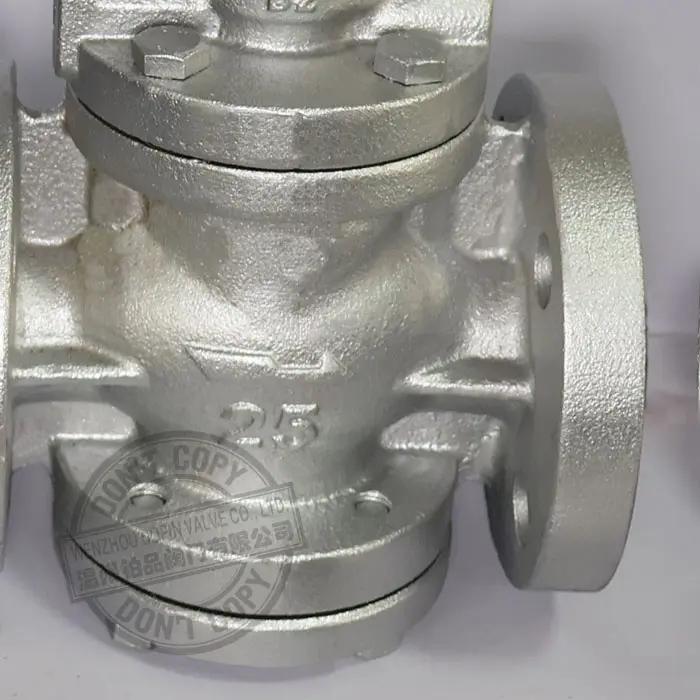
Pilot-Operated Piston Steam Pressure Reducing Valve
Working Principle
The BOPIN pilot-operated piston steam pressure reducing valve works on the principle of pilot control and piston balancing. Steam enters the main valve body through the inlet flange and passes toward the outlet side. A small amount of steam is directed to the pilot valve, which senses the downstream pressure through an external sensing line or internal channel.
When the outlet pressure falls below the preset value, the pilot valve opens, allowing steam to enter the piston chamber above the main valve disc. The increased pressure in the piston chamber pushes the piston downward, opening the main valve and allowing more steam to flow through. As the outlet pressure rises to the set pressure, the pilot valve gradually closes, reducing pressure in the piston chamber and allowing the main valve to throttle accordingly.
This pilot-operated design provides much higher accuracy and stability compared with direct-acting pressure reducing valves, especially under varying steam loads and pressure fluctuations.
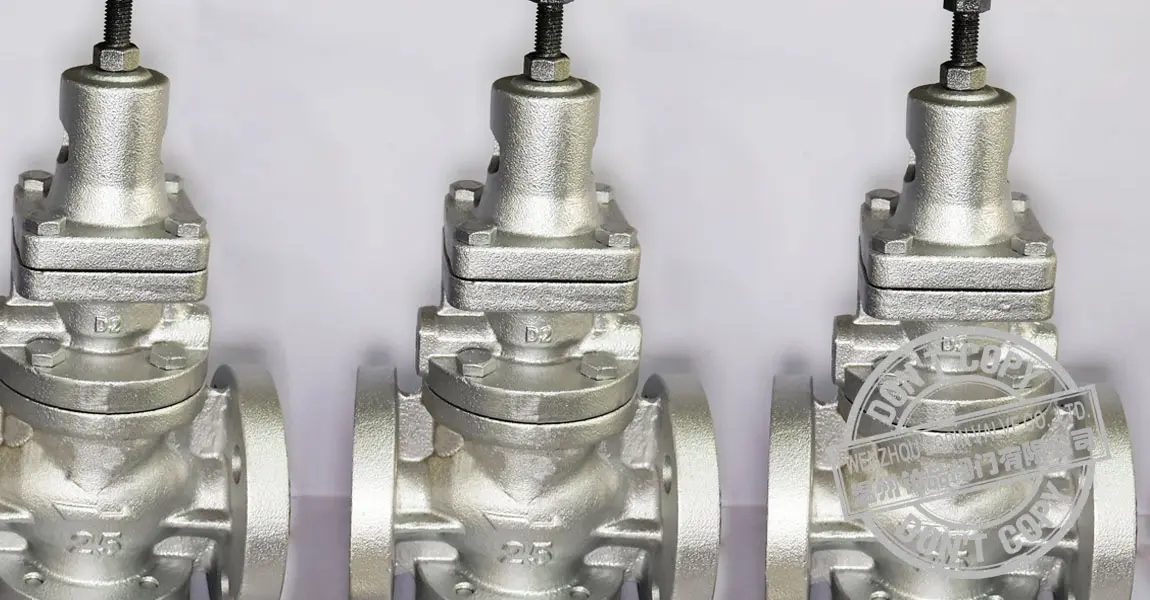
Key Features
1. Accurate Pressure Control
The pilot-operated piston mechanism ensures precise downstream pressure regulation, even when inlet pressure or steam demand changes significantly. This makes the valve ideal for processes requiring stable steam pressure.
2. Wide Pressure Reduction Range
BOPIN valves can handle high inlet steam pressures and reduce them to much lower outlet pressures in a single stage, improving system efficiency and reducing the need for multiple reducing stations.
3. Stable Operation Under Variable Loads
Unlike direct-acting valves, the pilot-operated design responds smoothly to changes in steam consumption, minimizing pressure hunting and fluctuation.
4. Durable Construction
The valve body is typically manufactured from ductile iron, cast steel, or stainless steel, depending on the application requirements. Internal components such as the piston, seat, and disc are made from wear-resistant materials to ensure long service life under high-temperature steam conditions.
5. Flanged End Connection
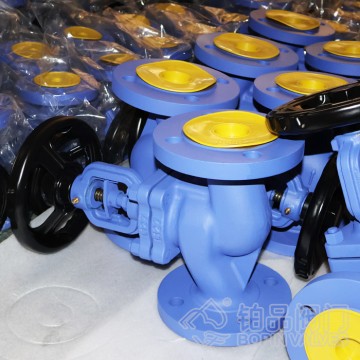
The flanged connection design allows easy installation and maintenance in industrial piping systems. Flanges are available according to DIN, ANSI, JIS, or other international standards.
6. Easy Maintenance
The valve is designed with accessible internal components, allowing inspection, cleaning, and replacement of parts without removing the entire valve from the pipeline.
Main Components
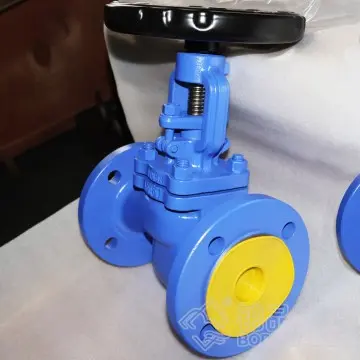
A typical BOPIN flanged pilot-operated piston steam pressure reducing valve consists of:
-
Main Valve Body – Contains the steam flow path and supports the internal components.
-
Piston Assembly – Converts pilot pressure into mechanical movement to control the main valve opening.
-
Main Valve Disc and Seat – Regulate the steam flow and provide tight shutoff.
-
Pilot Valve – Senses downstream pressure and controls pressure above the piston.
-
Adjusting Spring and Screw – Allow the operator to set the desired outlet pressure.
-
Strainer and Accessories – Often installed upstream to protect the valve from dirt and debris in the steam line.
Technical Specifications
Typical specifications for the BOPIN valve include:
-
Valve Type: Pilot-operated piston steam pressure reducing valve
-
Connection: Flanged end
-
Applicable Medium: Saturated steam, superheated steam, compressed air, and compatible gases
-
Body Material: Ductile iron, cast steel, or stainless steel
-
Nominal Size: DN15 to DN300 (or larger on request)
-
Pressure Rating: PN16, PN25, PN40, ANSI 150/300, etc.
-
Temperature Range: Up to approximately 350°C depending on material and design
-
Control Accuracy: ±5% or better under stable operating conditions
-
Standards: Designed and tested according to relevant DIN, EN, ANSI, or API standards
Advantages in Steam Systems
Improved Energy Efficiency
Maintaining the correct steam pressure reduces energy waste and improves heat transfer efficiency in downstream equipment such as heat exchangers, dryers, and boilers.
Protection of Equipment
Excessive steam pressure can damage piping, traps, and process equipment. The BOPIN pressure reducing valve protects the system by delivering steam at a safe and controlled pressure.
Reduced Noise and Vibration
The pilot-operated design provides smooth throttling action, which helps reduce noise, vibration, and mechanical stress in the pipeline.
Long Service Life
High-quality materials, precision machining, and robust design ensure reliable operation for many years, even in demanding industrial environments.
Installation and Operation
For optimal performance, the valve should be installed horizontally with the pilot system correctly oriented according to the manufacturer’s instructions. An upstream strainer and downstream pressure gauge are recommended. Proper steam line drainage and condensate removal are essential to prevent water hammer and ensure stable pressure control.
To set the outlet pressure, the operator adjusts the spring compression on the pilot valve while monitoring the downstream pressure gauge. Once set, the valve automatically maintains the desired pressure without further manual intervention.
Maintenance Recommendations
Regular maintenance helps ensure reliable performance:
-
Inspect and clean the upstream strainer periodically.
-
Check for steam leakage around flanges and packing.
-
Inspect the pilot valve and sensing line for blockage or damage.
-
Examine the piston, seat, and disc for wear during scheduled shutdowns.
-
Replace worn seals and gaskets with genuine BOPIN spare parts.
Proper maintenance minimizes downtime and extends the valve’s operational life.
Applications
The BOPIN flanged pilot-operated piston steam pressure reducing valve is suitable for a wide range of industries, including:
-
Power generation
-
Oil and gas
-
Petrochemical plants
-
Food and beverage processing
-
Textile and dyeing industries
-
Pharmaceutical manufacturing
-
Paper and pulp mills
-
District heating systems