





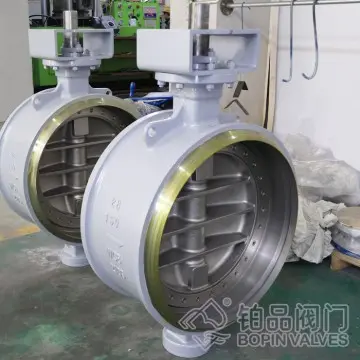
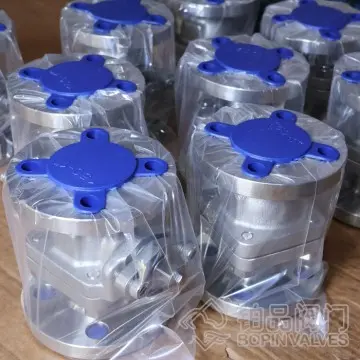
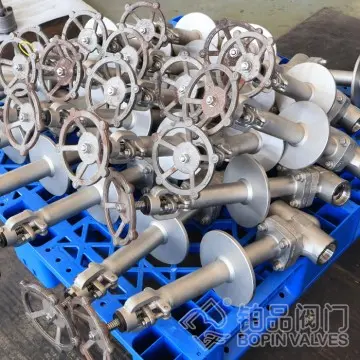
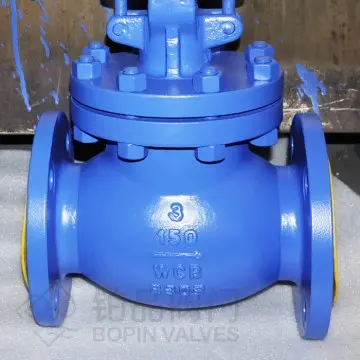


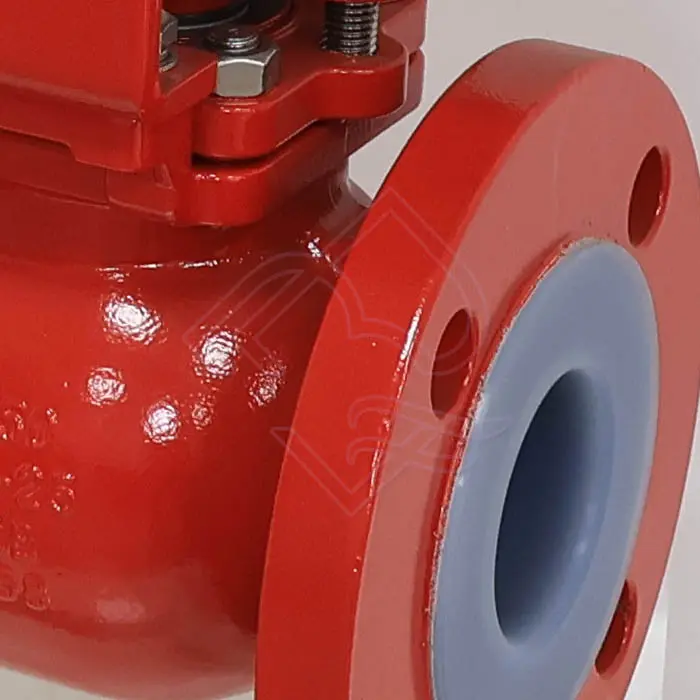
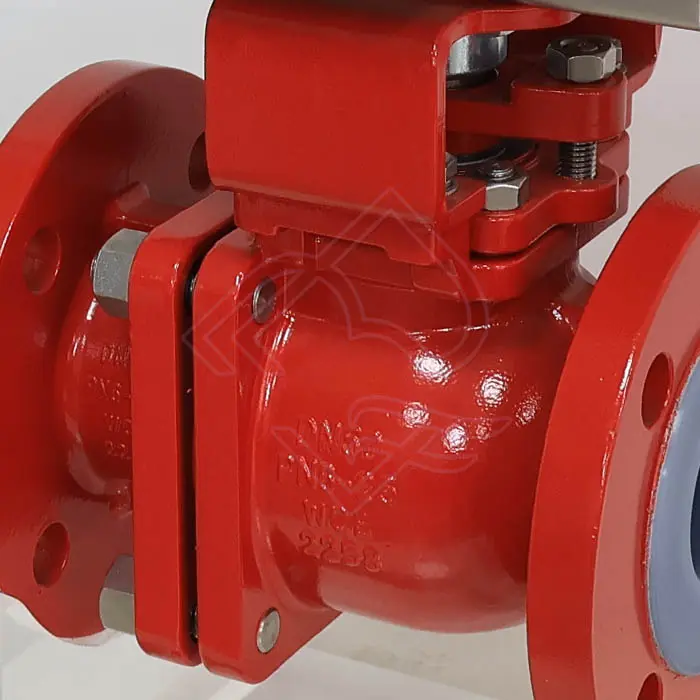
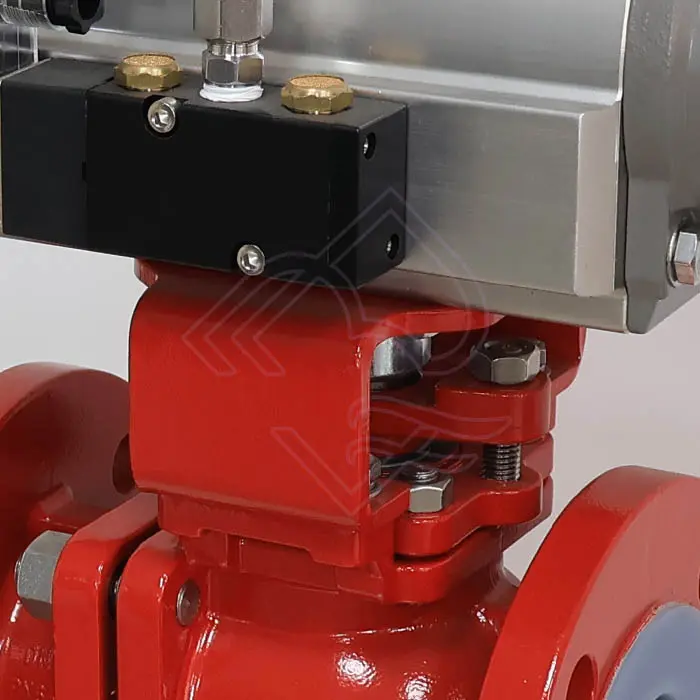
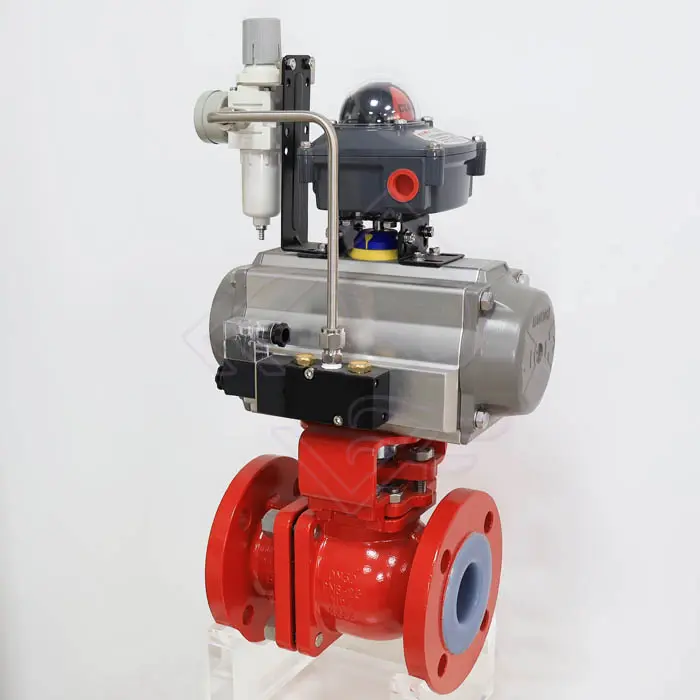
FLUORINE LINED BALL VALVE MANUFACTURER
Construction and Design
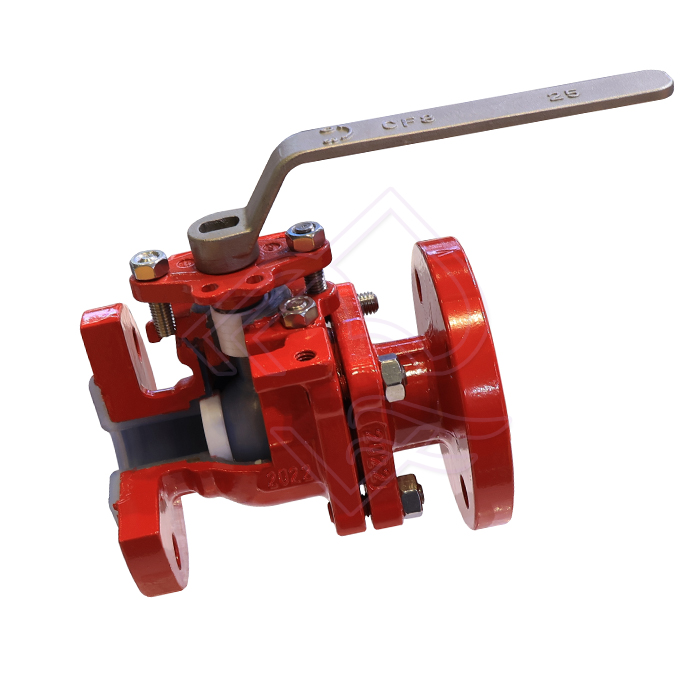
A cast steel fluorine lined ball valve consists of several key components:
1.1 Valve Body (Cast Steel)
The outer body is typically manufactured from cast steel grades such as WCB or WC6. Cast steel provides:
High mechanical strength
Excellent pressure-bearing capability
Resistance to impact and mechanical stress
Suitability for high-pressure systems
The cast construction ensures structural integrity while supporting the internal fluorine lining.
1.2 Fluorine Lining (PTFE, PFA, FEP)
The internal surfaces that come into contact with the fluid are lined with fluorine-based polymers. Common lining materials include:
PTFE (Polytetrafluoroethylene)
PFA (Perfluoroalkoxy)
FEP (Fluorinated Ethylene Propylene)
These materials provide:
Exceptional chemical resistance
Low friction coefficient
Non-stick properties
Temperature resistance
Zero corrosion from most acids and alkalis
The lining isolates the process fluid from the metal body, preventing corrosion.
1.3 Ball and Stem Assembly
The ball is usually made of stainless steel or carbon steel and fully lined with PTFE or similar fluoropolymer. The precision-machined spherical ball ensures:
Tight sealing
Smooth operation
Minimal torque requirements
The stem may also be lined or protected to avoid chemical attack.
1.4 Seats and Sealing Elements
Seats are commonly made from PTFE or reinforced fluoropolymers. They provide:
Bubble-tight shutoff
Low operating torque
Resistance to deformation
High-quality sealing systems prevent leakage and ensure compliance with strict industrial safety standards.
Working Principle
A fluorine lined ball valve operates on a simple quarter-turn principle:
When the handle or actuator rotates the stem 90 degrees, the ball inside the valve rotates.
If the bore of the ball aligns with the pipeline, fluid flows freely.
If the bore is perpendicular to the pipeline, flow is completely shut off.
This quick operation allows for fast and reliable control of corrosive fluids.
The low friction of PTFE lining reduces wear, making operation smooth even after long service periods.
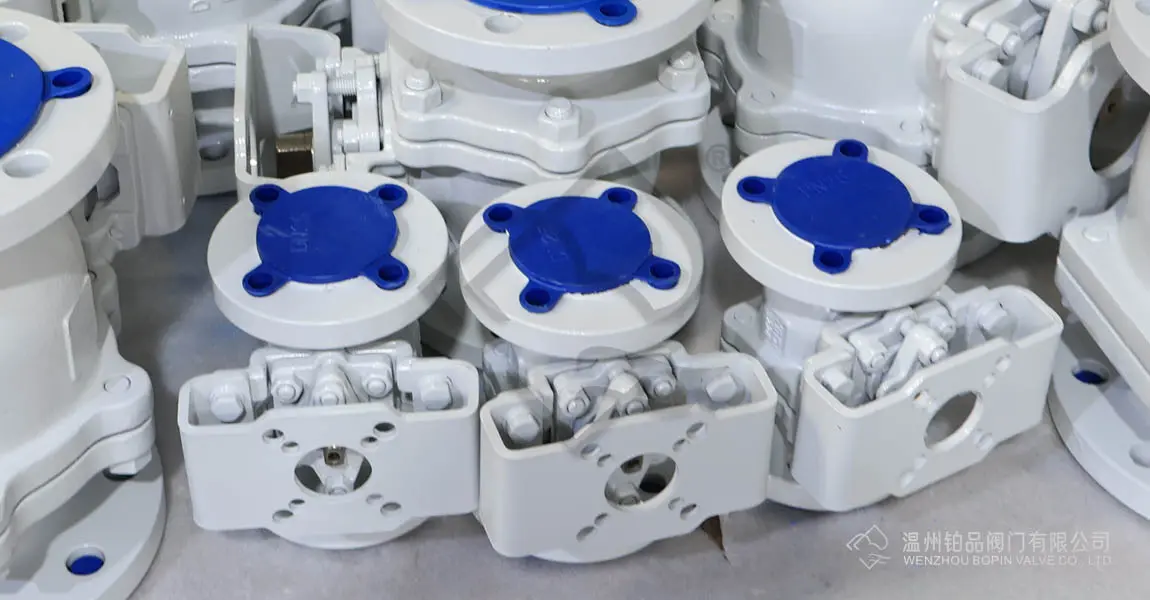
Key Features
3.1 Superior Corrosion Resistance
Fluorine lined ball valves are ideal for handling:
Strong acids (sulfuric acid, hydrochloric acid)
Strong alkalis
Chlorinated solvents
Oxidizing agents
Toxic chemicals
The PTFE lining prevents metal exposure, eliminating corrosion-related failures.
3.2 Excellent Sealing Performance
These valves provide zero leakage when properly installed. The soft PTFE seats ensure tight shutoff even at low pressures.
3.3 Wide Temperature Range
Typically, fluorine lined ball valves operate within:
–20°C to +180°C (depending on lining material)
PFA-lined valves may withstand higher temperatures compared to standard PTFE.
3.4 Low Operating Torque
The smooth fluoropolymer surface significantly reduces friction, allowing easy manual or automated operation.
3.5 Long Service Life
The combination of corrosion resistance and strong structural design extends operational lifespan, reducing maintenance costs.
Applications
Cast steel fluorine lined ball valves are widely used across industries where chemical resistance is critical.
4.1 Chemical Industry
Used for controlling aggressive chemicals in:
Acid transfer lines
Alkali processing systems
Chlorine handling
Solvent transport
4.2 Petrochemical Industry
Suitable for corrosive petrochemical derivatives and hazardous materials.
4.3 Pharmaceutical Industry
PTFE-lined valves ensure contamination-free processing and high purity standards.
4.4 Power Plants
Used in flue gas desulfurization systems and chemical dosing lines.
4.5 Water Treatment Plants
Effective for handling acidic and chemical treatment fluids.
Types of Fluorine Lined Ball Valves
Depending on system requirements, several configurations are available:
5.1 Floating Ball Type
Ball is supported by seats
Suitable for medium and low pressure
Common in chemical pipelines
5.2 Trunnion Mounted Type
Ball supported by trunnions
Ideal for high-pressure applications
Reduced operating torque
5.3 Manual Operated Valve
Operated by lever or handwheel.
5.4 Actuated Valve
Equipped with pneumatic actuators, electric actuators, hydraulic actuators, etc. Automation improves safety in hazardous environments.
Advantages Over Conventional Metal Valves
Feature Fluorine Lined Ball Valve Conventional Metal Valve
Corrosion Resistance Excellent Limited
Chemical Compatibility Very high Moderate
Maintenance Frequency Low High
Service Life Long Short in corrosive media
Leak Protection Excellent Moderate
The fluorine lining provides a protective barrier that significantly enhances performance in corrosive applications.
Installation Guidelines
Proper installation ensures optimal performance:
- Ensure pipeline alignment before installation.
- Avoid excessive tightening of flange bolts.
- Use appropriate gaskets compatible with process fluid.
- Do not weld near the lined valve without proper protection.
- Follow manufacturer torque specifications.
Improper installation may damage the lining and compromise performance.
Maintenance Considerations
Although fluorine lined ball valves require minimal maintenance, periodic inspection is recommended:
- Check for external leakage.
- Inspect actuator function.
- Ensure smooth valve rotation.
- Verify sealing performance.
Avoid abrasive media, as fluoropolymer linings can be damaged by solid particles.
Design Standards and Compliance
These valves are typically manufactured in accordance with international standards such as API standards, ANSI standards, ISO standards, DIN standards, etc. Pressure ratings commonly include Class 150, Class 300. Flange connections may comply with ANSI B16.5 or DIN specifications.
How to Select Correct Fluorine Lined Ball Valve
When selecting a cast steel fluorine lined ball valve, consider:
- Type of chemical media
- Operating temperature
- Operating pressure
- Flow rate requirements
- Valve size
- End connection type
- Automation requirements
- Proper selection ensures safety and efficiency.
Limitations
While highly resistant to corrosion, fluorine lined ball valves have some limitations:
- Not suitable for high-temperature steam beyond lining limits
- Not ideal for abrasive slurry applications
- Lining damage may require full valve replacement
- Limited structural rigidity compared to solid metal seats in extreme pressure
- Understanding these limitations helps prevent operational issues.