
Inquiry
Form loading...

Why Choose DIN Bellows Sealed Globe Valves?

Choosing the right valve can determine whether a process remains stable, clean, and safe. Din Bellows Sealed Globe Valves are designed for applications where stem leakage requires serious control. Their welded metal bellows isolate the moving stem from the process medium. This design helps protect operators, equipment, and surrounding areas from unwanted emissions.

The globe valve body also supports accurate flow regulation. Its closing element moves gradually against the seat, allowing controlled adjustment rather than abrupt shutoff. In steam, hot oil, chemical, and vacuum-related services, this control can reduce operational stress. However, the bellows is not a magic shield. Material selection, pressure limits, temperature range, and cycling frequency must match the actual service conditions.

Practical inspection still matters.

Experienced maintenance teams check weld quality, bonnet alignment, seat condition, and actuator response. They also review the valve’s documentation before installation. DIN-based dimensions may simplify equipment integration, but compatibility should never be assumed. Pipe class, face-to-face length, connection type, and testing requirements need confirmation.

There is another detail worth considering. A lower initial price may hide higher maintenance exposure. Replacing a failed bellows in a difficult location can interrupt production and increase labor costs. A reliable evaluation therefore considers service life, access, spare parts, and supplier support. No valve performs perfectly in every system. The strongest choice comes from matching Din Bellows Sealed Globe Valves with verified process data, competent engineering, and disciplined maintenance.

Why Choose DIN Bellows Sealed Globe Valves?

DIN Bellows Sealed Globe Valves: Definition and Operating Principle

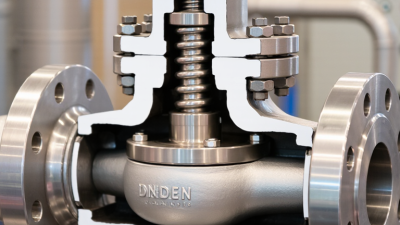
DIN bellows sealed globe valves are industrial shutoff and control valves designed around DIN dimensional and pressure requirements. Their defining feature is a formed metal bellows surrounding the moving stem. This bellows creates a pressure boundary between the process fluid and the atmosphere. Unlike a conventional packed valve, it does not depend on compression packing as the primary stem seal.

When the handwheel turns, the stem moves the globe-shaped disc toward or away from the seat. Fluid passes through the body when the disc lifts. Lowering the disc restricts the passage and can provide controlled throttling. The bellows flexes axially during this movement. It remains sealed while absorbing repeated stem travel. A welded connection between the bellows and bonnet usually protects the process chamber from leakage.

During maintenance, technicians should inspect the bellows for corrosion, fatigue marks, and uneven folds. They should also verify seat alignment and stem movement before installation. Small installation errors can create significant operating problems. The valve may meet its design standard, yet perform poorly with unsuitable temperature, pressure, or fluid conditions. This is an important limitation. Bellows fatigue is not always visible during a quick inspection. Many engineers therefore consider cycle frequency, thermal expansion, and pressure fluctuations during selection. A secondary packing arrangement may also reduce external emissions if the bellows fails, but it cannot replace proper sizing and testing.
Key Design Features of DIN Bellows Sealed Globe Valves

Why Choose DIN Bellows Sealed Globe Valves?

Key Design Features of DIN Bellows Sealed Globe Valves

DIN bellows sealed globe valves are designed for demanding industrial systems. Their main feature is a welded metal bellows around the stem. This barrier limits process leakage and protects the packing area from corrosive, toxic, or high-temperature media. The globe valve body also supports accurate flow control through a guided plug and seat. In practical operation, a handwheel provides steady movement, while the stem remains isolated from the fluid. That detail matters in chemical lines, steam services, and vacuum equipment.

Material selection is equally important. Stainless steel bellows can improve resistance in harsh environments, but performance depends on pressure, temperature, and fluid composition. A robust body, precise seat machining, and clear flow direction markings support safer installation. DIN-based dimensions can also simplify equipment selection and maintenance across compatible systems. However, no valve is perfect. Bellows fatigue may occur after repeated cycling, especially when alignment or operating limits are ignored. Inspection records and pressure testing should support every serious application.

Tips: Check the media, temperature, pressure, and cycling frequency before purchase. Keep the stem aligned during installation. Do not use excessive handwheel force. Inspect for unusual noise, slow movement, or external damage. A small leakage test can reveal installation problems early. When specifications conflict, ask a qualified engineer to review the service conditions.

How Bellows Sealing Prevents Leakage and Emissions

Why Choose DIN Bellows Sealed Globe Valves?

In practical maintenance work, fugitive emissions often begin at the valve stem. A conventional packing seal can loosen, harden, or wear after repeated movement. A bellows sealed globe valve uses a flexible metal bellows between the stem and bonnet. The stem moves, while the bellows forms a closed barrier around the process fluid. That detail matters.

This design greatly reduces leakage from volatile, toxic, or high-temperature media. It also limits exposure during routine operation, sampling, and equipment inspection. DIN-based dimensions and pressure requirements support consistent installation and replacement planning. However, the valve does not create zero risk. Bellows fatigue may develop after excessive cycling, vibration, or unsuitable temperature changes. Careful material selection remains essential.

Technicians should check the valve’s pressure class, temperature range, weld quality, and operating frequency. A secondary packing arrangement can provide additional protection if the bellows fails, but it should not replace inspection. Look for unusual stem resistance, bonnet temperature changes, or visible corrosion near welded areas. Small warning signs are easy to dismiss. That can be costly. Proper alignment and controlled actuation also extend service life, although real systems rarely operate under perfect conditions.

Performance Benefits in Demanding Industrial Applications

Why Choose DIN Bellows Sealed Globe Valves?

Performance Benefits in Demanding Industrial Applications

DIN bellows sealed globe valves protect process media from external leakage around the stem. Their welded metal bellows create a secondary pressure barrier, which is valuable in toxic, volatile, or high-temperature service. In practical maintenance, this design also reduces reliance on repeated packing adjustments. Small detail. It matters near hot pipework, where access is difficult and exposure risks increase.

The International Energy Agency’s Global Methane Tracker 2024 estimates that fossil fuel operations released more than 120 million tonnes of methane in 2023. The report also states that around 75% of fossil fuel methane emissions could be avoided with existing measures. Bellows sealing cannot solve every emissions problem, but it addresses one recurring leakage path. The UNEP Global Methane Assessment found that human-caused methane emissions could fall by up to 45% this decade using available measures. That makes containment-focused valve selection more than a maintenance preference.

DIN globe valve geometry supports controlled throttling, while the bellows helps maintain stem tightness through thermal cycling and frequent operation. Engineers should still verify pressure class, temperature range, corrosion resistance, and bellows fatigue life. A valve is not maintenance-free. Improper installation, vibration, or contaminated media can shorten service life. According to ISO 15848-1, fugitive-emission performance must be demonstrated through defined test conditions, not assumed from appearance. Site records should connect inspection results with operating cycles, because laboratory performance may not fully reflect field conditions. That gap deserves attention.

Selection Criteria for DIN Bellows Sealed Globe Valves

Why Choose DIN Bellows Sealed Globe Valves?

Selection Criteria for DIN Bellows Sealed Globe Valves

Selecting a DIN bellows sealed globe valve starts with the service conditions. Confirm the medium, operating pressure, temperature, and required flow direction. Steam, chemicals, and vacuum service may require different bellows materials and body constructions. Check the valve size against the pipeline, not only the connection label. A small mismatch can create turbulence, noise, or poor control. DIN dimensions support consistency, but the complete specification still needs verification.

Pay close attention to shutoff performance and external leakage protection. The bellows should match the movement range and pressure class. Ask for material certificates, pressure-test records, and documented leakage results. Actuator type also matters when frequent adjustment or remote operation is expected. Field experience shows that installation space is often underestimated. Leave room for bonnet removal and future inspection. A valve may meet the data sheet yet remain difficult to maintain.

Tips: Compare the valve with actual process data, not standard assumptions. Review temperature changes during startup and shutdown. Inspect the bellows area for transport damage before installation. No checklist is perfect. Have an experienced engineer review unusual media, cycling, or high-temperature conditions before approval.

Why Choose DIN Bellows Sealed Globe Valves? - Selection Criteria for DIN Bellows Sealed Globe Valves

Selection Criterion Typical Options or Values Selection Guidance Why It Matters
Valve Function Isolation, throttling, or frequent shut-off service Choose a globe valve when accurate flow regulation and positive shut-off are required. The globe-valve body and seating arrangement support controlled flow, although pressure loss is generally higher than in a full-bore gate valve.
Emission-Control Requirement Standard packing or bellows-sealed stem Select a bellows-sealed design when external stem emissions must be minimized or the process fluid is hazardous, toxic, volatile, or environmentally sensitive. The welded or formed bellows creates a secondary barrier between the process medium and the valve stem area.
Nominal Size DN15 to DN400, subject to design and pressure rating Match the valve DN to the connected piping size and verify the required flow capacity, face-to-face dimension, and installation space. Oversizing can reduce controllability, while undersizing can increase velocity, pressure drop, noise, and erosion.
Pressure Rating PN16, PN25, PN40, PN63, PN100, PN160, or higher where available Select the PN class using the maximum allowable working pressure at the actual operating temperature, not pressure alone. Allowable pressure normally decreases as temperature rises and depends on the pressure-temperature rating of the material.
Operating Temperature Common service range: approximately −196°C to +400°C, depending on materials and bellows construction Confirm the design temperature, start-up and shut-down temperatures, thermal cycling, and the temperature limit of the gasket, packing, seat, and bellows. Thermal expansion, fatigue, embrittlement, and loss of sealing performance can occur if material limits are exceeded.
Process Medium Steam, hot water, thermal oil, gases, solvents, refrigerants, and corrosive fluids Check chemical compatibility of the body, trim, bellows, seat, gasket, and any surface treatment with the medium concentration and temperature. Material compatibility helps prevent corrosion, contamination, premature leakage, and loss of mechanical strength.
Body Material Carbon steel, stainless steel, low-temperature steel, or alloy steel Use carbon steel for compatible general services, stainless steel for improved corrosion resistance, and low-temperature or alloy grades when required by the service conditions. The body must retain pressure-containing strength and corrosion resistance throughout the design life.
Bellows Material Stainless steel bellows, commonly with one or more plies Select the bellows alloy and construction according to corrosion exposure, pressure, temperature, stroke, and expected operating cycles. Bellows fatigue life is affected by movement, pressure, temperature, vibration, and the number of cycles.
End Connection Flanged, butt-weld, or socket-weld ends Use flanged ends where dismantling is important; use welded ends where compactness, reduced leak paths, or high system integrity is preferred. The connection type affects installation, maintenance access, thermal stress, weight, and potential leakage points.
Flange Standard EN 1092-1 flange dimensions and pressure designations where specified Verify nominal size, PN designation, flange facing, bolt-hole pattern, gasket type, and mating-pipe compatibility. Correct dimensional and pressure-class matching is essential for safe assembly and reliable joint sealing.
Applicable Valve Standard DIN EN 13709 for industrial globe valves and globe stop-and-check valves Confirm that the valve design, dimensions, pressure-temperature ratings, and testing documentation meet the project specification. Using a recognized product standard improves consistency in design verification, inspection, and documentation.
Leakage Testing Shell test, seat test, and bellows or stem-emission verification as specified Request test procedures and acceptance criteria based on the applicable project standard, such as EN 12266-1 where applicable. Testing confirms pressure-boundary integrity and the required shut-off performance before installation.
Seat Design Metal-to-metal seat or resilient-assisted seat, depending on service Choose the seat arrangement according to temperature, erosion risk, shut-off class, particle content, and chemical compatibility. Seat materials directly influence leakage performance, service life, torque, and resistance to thermal or mechanical damage.
Actuation Handwheel, pneumatic actuator, electric actuator, or hydraulic actuator Use manual operation for accessible low-cycle service and powered actuation for remote, automated, or emergency isolation duties. Actuator sizing must consider differential pressure, valve travel, operating frequency, fail position, and available utilities.
Installation Orientation Usually installed with the stem oriented vertically or within the limits stated by the manufacturer Check flow direction, accessibility, drainability, support requirements, and clearance for handwheel or actuator maintenance. Correct installation reduces mechanical loading, prevents fluid retention where undesirable, and supports safe operation.
Maintenance and Life-Cycle Cost Bellows inspection, seat inspection, actuator maintenance, and periodic functional testing Evaluate inspection access, spare-part availability, bellows cycle life, repair procedures, and replacement time before purchase. A higher initial cost may be justified when reduced fugitive emissions, fewer packing adjustments, and improved process safety are required.