
+86 19720579616
+86 19720579616
Zalo
China’s industrial valve sector includes manufacturers serving power, water, chemical, and general process applications. This guide to China’s top 10 DIN gate valve manufacturers offers a practical starting point for buyers comparing suppliers. The phrase Din Gate Valves refers here to gate valves designed to meet relevant DIN requirements; confirm the exact standards and editions for each product.
A name on a list is not proof of suitability. Buyers should review material specifications, pressure and temperature ratings, face-to-face dimensions, end connections, inspection records, and traceability. Ask whether the supplier can provide drawings, test reports, and details about production and quality controls. Small details matter. Check carefully. A clear nameplate and consistent test records can save time during installation and maintenance.
Assess the manufacturers against your application needs, not broad claims alone. A valve for clean water may not suit abrasive service or elevated temperatures. Confirm compatibility with the actual medium, operating conditions, and project documentation. Also check lead times, communication, spare-part support, and the scope of stated certifications. These points can reveal gaps that a polished catalog may hide. This overview cannot replace technical review, and supplier information can change. Treat it as a shortlist, then verify current capabilities directly with each company before requesting quotations or approving a design.
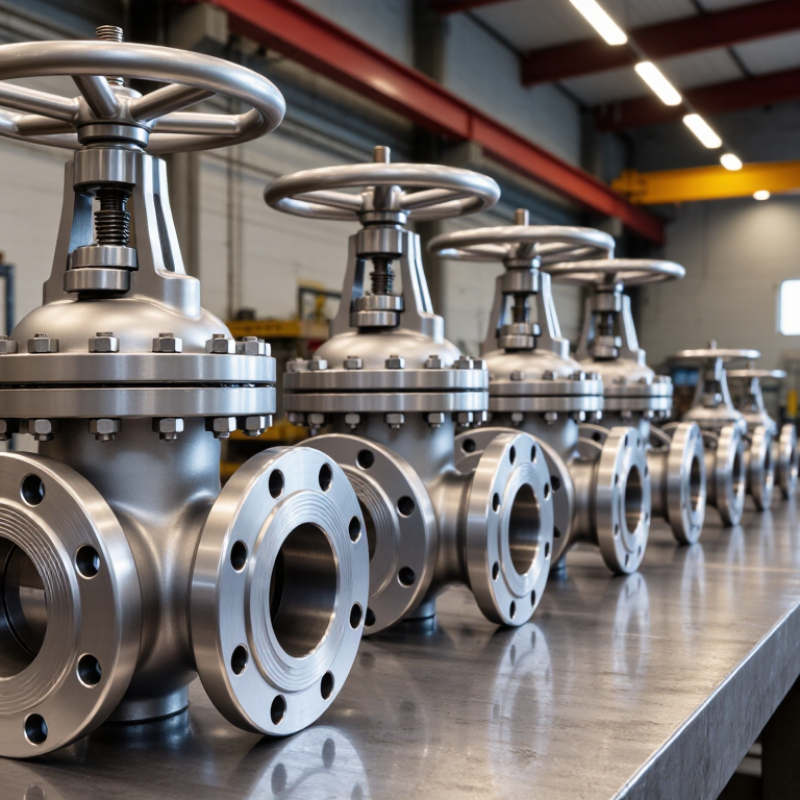
DIN gate valves are linear-motion isolation valves: a rising or concealed stem lifts a gate clear of the flow path. When fully open, they offer relatively little resistance, making them useful on large-bore water, steam, and process lines. They are not ideal for throttling. A partly raised gate can vibrate, wear unevenly, and lose sealing performance. That detail matters.
DIN EN 1984 covers steel gate valves, while DIN EN 12266-1 specifies pressure testing for industrial valves. These standards help buyers compare construction and test requirements, but they do not guarantee suitability for every service.
Engineers still need to check pressure, temperature, fluid compatibility, end connections, and operating frequency. A valve beside a hot steam line, for example, may need different materials and packing than one on a cooling-water header.
The International Energy Agency’s Energy Efficiency 2023 report says industry accounts for about 37% of global final energy consumption. That figure gives useful context: reliable isolation supports maintenance and process control across energy-intensive facilities.
Yet a standards-compliant valve can still be the wrong choice if sediment, frequent cycling, or poor installation is overlooked. Selection is rarely tidy. A clear duty specification helps more than relying on the DIN label alone.
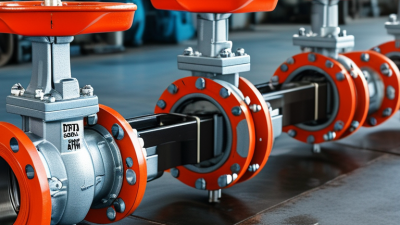
When assessing Chinese DIN gate valve manufacturers, begin with the exact service conditions. Record the medium, pressure, temperature, pipe size, and operating frequency. Ask which DIN or EN requirements apply to the valve, flange dimensions, and pressure testing. Standards can vary by design and edition, so verify the stated scope rather than relying on a general “DIN compliant” claim.
Check material selection against the service conditions. Request material certificates and traceability records linking the valve body to its heat number. Review drawings for face-to-face dimensions, flange drilling, stem design, and access for maintenance. Ask how each unit is tested, and request sample inspection reports showing test pressure, duration, and acceptance criteria. A polished data sheet is not proof. It is tempting to rank suppliers by price, but that shortcut can miss costly differences in testing and documentation.
Evaluate production controls through a factory audit or a detailed remote review. Look for machining and assembly records, calibrated gauges, nonconformance handling, and procedures for final inspection. Ask who performs the tests and how failed units are recorded. Compare lead times with actual production capacity, not only a sales estimate. Small gaps in records matter. A supplier may answer questions quickly yet still need clearer evidence; note that uncertainty and agree on corrective steps before placing an order.
China’s DIN gate valve manufacturers serve industries that need dependable isolation in pipelines and process systems. A useful profile looks beyond product photos. It checks whether a maker offers clear dimensional drawings, material options, pressure ratings, and traceable inspection records. These details help buyers compare ten notable manufacturers on practical grounds, rather than relying on broad claims about quality.
Manufacturing capability matters, too. Ask how bodies are cast or forged, how sealing surfaces are finished, and what tests are performed before shipment. A detailed supplier profile should explain the available operating conditions and the limits of each valve design. It should also distinguish standard configurations from custom requests. Not every supplier publishes equally complete information, and that gap deserves attention. A polished catalogue is not proof of consistent production.
Tips: Request a drawing and test report for the exact model under consideration. Check face-to-face dimensions, end connections, and material specifications against your project documents. Compare response times and after-sales support as well. Small documentation gaps can become costly later. No shortlist is perfect.
DIN gate valve selection starts with the correct dimensional and pressure requirements. Confirm the applicable DIN or EN standard, face-to-face length, flange drilling, and pressure class before comparing suppliers. A valve that fits the pipe may still be unsuitable for the service. Materials matter: ductile iron can suit many water systems, while carbon or stainless steel may be specified for different temperatures, fluids, or corrosion conditions. Check the body, wedge, stem, and seat materials separately. One detail is easy to miss.
Manufacturing quality depends on more than a polished exterior. Ask how castings are inspected for porosity and how machining dimensions are verified. Pressure testing should follow the stated procedure, with results linked to identifiable production records. Review material certificates, inspection reports, and traceability marks together; a tidy document folder alone proves little. Requirements vary by application, so avoid assuming that every valve carrying a DIN designation has identical performance. Even a sound specification can leave gaps if operating conditions are vague.
Tips: Share the fluid, temperature, pressure, and installation details with the manufacturer. Request the applicable standard and test records, then check that valve markings match the documents. If a requirement is unclear, pause and verify it before ordering. I would still allow time for a second review.
Scope: This standards-based comparison matrix summarizes ten technical evaluation areas for DIN gate valves. It does not rank or make supplier-specific claims about individual manufacturers.
| No. | Evaluation Area | Relevant Standard or Reference | Typical Materials or Parameters | Quality Assurance Evidence to Request |
|---|---|---|---|---|
| 1 | Product design and application | EN 1171 for cast-iron gate valves; EN 1074-2 for water-supply isolating valves where applicable | Specify service medium, temperature, pressure, end connection, and whether the valve is intended for water or industrial service. | Approved drawings, design calculations where applicable, product datasheet, and clearly stated scope of compliance. |
| 2 | Pressure-containing body and bonnet | EN 12516 series provides methods for shell design and pressure-rating assessment; applicable requirements depend on valve type and design. | Common choices include grey cast iron, ductile iron, cast carbon steel, and cast stainless steel, selected for the specified service. | Material certificates, casting traceability, design documentation, and evidence that the selected material suits the stated pressure and temperature. |
| 3 | Cast-iron material identification | EN 1561 for grey cast iron; EN 1563 for spheroidal graphite (ductile) cast iron | Examples include EN-GJL-250 grey iron and EN-GJS-400-15 ductile iron. Suitability depends on design conditions and the applicable product standard. | Material test certificates linked to heat or casting identification, plus chemical or mechanical test records where specified. |
| 4 | Face-to-face dimensions | EN 558 covers face-to-face and centre-to-face dimensions for metal valves in pipeline systems. | Dimension series and nominal size should be stated on the drawing and purchase specification; dimensions vary by valve type and series. | Inspection reports recording measured face-to-face dimensions against the specified series and nominal size. |
| 5 | Flanged-end dimensions | EN 1092-2 specifies circular flanges for cast-iron valves and associated components. | Flange type, nominal pressure designation, drilling, and facing must match the mating pipeline flange. | Flange dimensional inspection records and approved interface drawings; verify the applicable part and pressure designation. |
| 6 | Pressure and leakage testing | EN 12266-1 sets pressure-test requirements for industrial valves; EN ISO 5208 is also used for industrial-valve pressure testing where applicable. | Test pressure, duration, test medium, and acceptance criteria depend on the governing standard, valve design, and purchase specification. | Documented shell and closure test results identifying the valve, test method, test pressure, duration, and acceptance outcome. |
| 7 | Stem and internal components | Material selection should follow the service conditions and the applicable valve specification. | Stainless-steel grades such as 1.4021 or 1.4401 may be used for certain components; the selected grade must be confirmed for the design and medium. | Component material records, identification traceability, dimensional checks, and evidence that material choices match the approved bill of materials. |
| 8 | Wedge, seat, and sealing materials | Use the applicable product standard and project specification; elastomer selection may also require compliance with local potable-water rules. | Possible options include metal-seated designs or resilient seals such as EPDM or NBR. Compatibility depends on fluid, temperature, and regulatory requirements. | Seal-material identification, batch traceability, compatibility documentation, and functional or leakage-test records. |
| 9 | Coating and corrosion protection | Coating requirements should be defined by the project specification and the intended operating environment. | Internal and external coating type, surface preparation, and required coating thickness should be agreed before manufacture. | Coating inspection records, thickness measurements against the specified limits, and relevant adhesion or holiday-test results when required. |
| 10 | Factory quality system and documentation | ISO 9001 addresses quality-management systems; EN 10204 defines types of inspection documents for metallic products. | Require documentation appropriate to the order, including material certificates, inspection records, test reports, and final product identification. | Current quality-system certificate scope, inspection and test plan, calibration records, nonconformance controls, and order-specific final dossier. |
When comparing China’s DIN gate valve manufacturers, start with the project’s operating conditions, not the size of a catalogue. A water-treatment line may need resilient-seated valves, while a high-temperature process can require different body materials and packing. Check nominal sizes, pressure ratings, face-to-face dimensions, and end connections against the approved piping drawings. A broad range helps when one supplier must cover several systems. It is not proof of suitability.
Ask for material certificates, pressure-test records, dimensional drawings, and clear information about inspection procedures. These details help engineers assess whether a valve fits the specification and how it can be maintained. Delivery capacity matters too; confirm production schedules for the required size and quantity, rather than relying on a general lead-time estimate. Check the details. Product pages can leave gaps, and buyers may need to request clarification. That is easy to overlook. Compare suppliers against a project-specific checklist, including spare-part availability and support for installation questions. A low price can look attractive, but mismatched dimensions or missing documents may create extra work on site.
This technical reference compares common DIN nominal pressure classes used when evaluating gate valve requirements for different projects. PN values are nominal designations; allowable working pressure depends on factors such as material and operating temperature. The chart shows standardized pressure classes, not company-specific product data or a manufacturer ranking.